If you run a business in Calgary with 10 to 500 employees, you have probably looked at Odoo, NetSuite, and SAP at some point. The short answer is that there is no single winner - each platform fits a different company profile. The rest of this article breaks down where each one actually makes sense.
The Quick Comparison
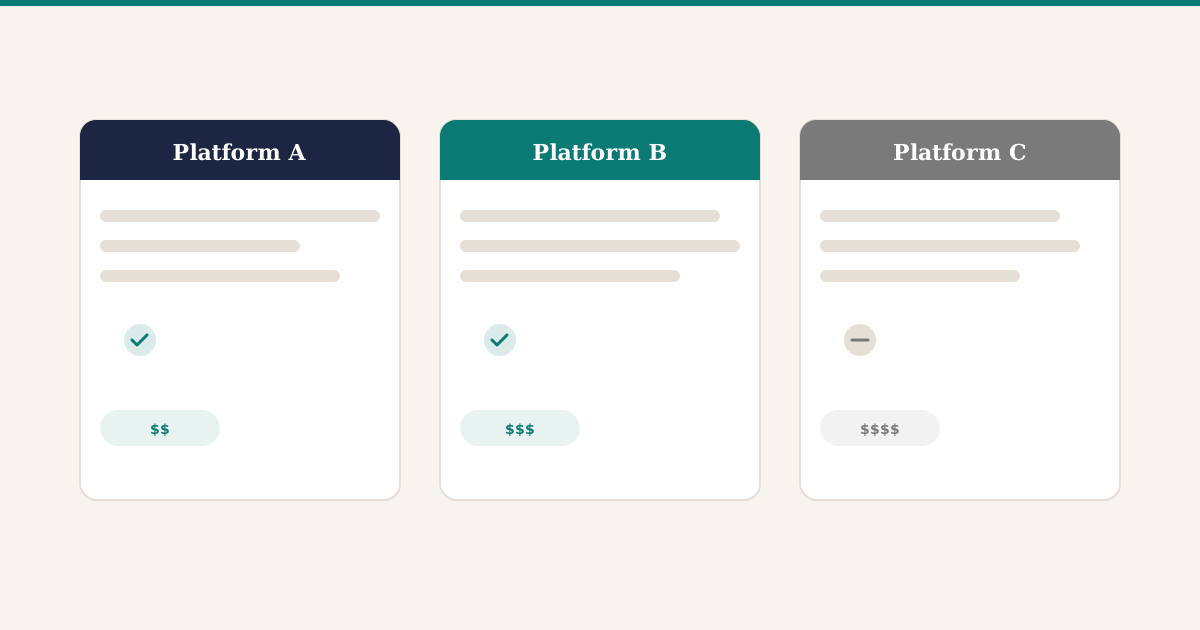
Here is what matters side by side:
| Odoo | NetSuite | SAP Business One | |
|---|---|---|---|
| Best fit | 10-100 employees | 50-500 employees | 100-500+ employees |
| Annual cost (typical) | $6K - $40K | $30K - $120K+ | $80K - $300K+ |
| Implementation time | 4-12 weeks | 3-6 months | 6-18 months |
| Implementation cost | $10K - $60K | $50K - $200K | $100K - $500K+ |
| Complexity | Low to moderate | Moderate to high | High |
| Customization | Open source, highly flexible | Possible but expensive | Rigid without consultants |
| Core strength | Modular flexibility | Financial consolidation | Complex manufacturing |
These are real ranges based on what Alberta businesses actually pay - not the numbers vendors put on their marketing pages.
SAP Business One: Best for Complex Manufacturing and Multi-Entity Operations
SAP is the biggest name in ERP, and for good reason. It handles massive complexity - multi-country operations, thousands of SKUs, intricate supply chains, and detailed regulatory compliance across jurisdictions. For a Calgary-based company with 100 to 500 employees, operations in multiple provinces, and complex production workflows, SAP Business One is worth serious evaluation.
SAP’s manufacturing modules are particularly strong. If a company runs multi-level bills of materials, MRP planning, quality management, and shop floor control, SAP handles that depth better than most alternatives. The ecosystem of add-ons for oil and gas, food and beverage, and discrete manufacturing is also more mature.
The trade-offs are real, though. SAP Business One starts around $80K per year in licensing alone. Implementation runs six months minimum and usually requires a specialized consulting firm. For a 30-person company, that math is hard to justify.
Best for: Companies with 100 to 500 employees, complex manufacturing or production workflows, multi-entity structures, revenues above $20M, and a dedicated IT team to manage the system long-term.
NetSuite: Best for Finance-First, Multi-Entity Companies
NetSuite - owned by Oracle - was built cloud-first and handles financials exceptionally well. It is the strongest of the three for multi-subsidiary management, intercompany transactions, and financial consolidation. A lot of Calgary tech companies, professional services firms, and holding companies with multiple entities use it once they pass $10M in revenue.
The financial reporting and dashboard capabilities are genuinely strong. For a company running three subsidiaries across Canada and the US that needs consolidated reporting with automatic currency handling and intercompany eliminations, NetSuite is hard to beat.
But there are catches that Alberta businesses run into. Pricing is opaque - NetSuite does not publish rates. Base licensing starts around $999 per month plus $99 per user per month, but by the time modules get added, most Calgary businesses end up at $30K to $120K annually. NetSuite is also known for annual price increases of 5 to 8 percent baked into the contract. Implementation runs three to six months and $50K to $200K. And the platform is proprietary - once a company is in, moving out is expensive and painful.
Best for: Growing companies past $10M in revenue, 50 to 500 employees, strong need for multi-entity financial consolidation, and budget for both the software and a proper implementation.
Odoo: Best for Operations-First Companies Wanting Modular Flexibility
Odoo takes a fundamentally different approach. The Community edition is open source - free to use, free to modify. The Enterprise edition runs $24 to $36 per user per month depending on the apps selected. For a 25-person company, that is roughly $7,200 to $10,800 per year in licensing.
The modular design is the main draw. A company does not have to buy everything at once. Start with accounting and inventory, add CRM later, bolt on manufacturing down the road. This matches how most small to mid-size businesses actually grow - incrementally, not all at once. Implementation for a 20 to 50 person company typically takes four to twelve weeks.
The trade-offs: Odoo’s financial consolidation features are less mature than NetSuite’s. Its manufacturing depth does not match SAP’s. And while the open-source community is active, finding experienced Odoo consultants in Western Canada can take more searching than finding NetSuite or SAP partners through those vendors’ formal partner networks.
Best for: Companies with 10 to 100 employees, revenues under $20M, operations-focused needs (inventory, sales, CRM), preference to start small and expand, and a first-year ERP budget under $50K.
The Hidden Costs Nobody Mentions
Every ERP vendor will hand over a clean-looking quote. Here is what typically gets left out:
Data migration. Getting existing data into any new system takes real work. Budget $5K to $30K depending on how messy the current data is. This applies to all three platforms.
Training. SAP typically requires two to four weeks of training per department. NetSuite needs one to two weeks. Odoo usually needs a few days to a week. But skipping training on any platform leads to workarounds that defeat the purpose of the investment.
Ongoing customization. SAP and NetSuite customizations run $200 to $400 per hour from specialized consultants. Odoo customization runs $100 to $200 per hour from most partners. All three platforms will need ongoing adjustments as a business evolves.
Annual price increases. SAP and NetSuite both build escalation clauses into their contracts. Odoo Enterprise pricing has been relatively stable, and the Community edition is free indefinitely. But “free” still requires hosting and maintenance costs.
A Decision Framework Based on Company Profile
Rather than picking a winner, here is a way to match the platform to the business:
If your company has 10 to 100 employees, is operations-focused, and has a first-year ERP budget under $50K - start evaluating Odoo. Also look at Acumatica and ERPNext, which occupy a similar space.
If your company has 50 to 500 employees, runs multiple entities, and needs strong financial consolidation - start evaluating NetSuite. Also look at Sage Intacct, which competes directly on multi-entity accounting strength.
If your company has 100 to 500 employees, runs complex manufacturing, and has a first-year budget above $150K - start evaluating SAP Business One. Also look at Microsoft Dynamics 365 Business Central, which targets a similar market.
None of these platforms is universally better than the others. The right choice depends on company size, operational complexity, budget, and which business functions matter most. Get pricing in writing with clear terms on annual increases before signing anything. The biggest regret Alberta business owners report is not understanding the total five-year cost before committing.